How to Import Spices from India: A Complete Guide for International Buyers
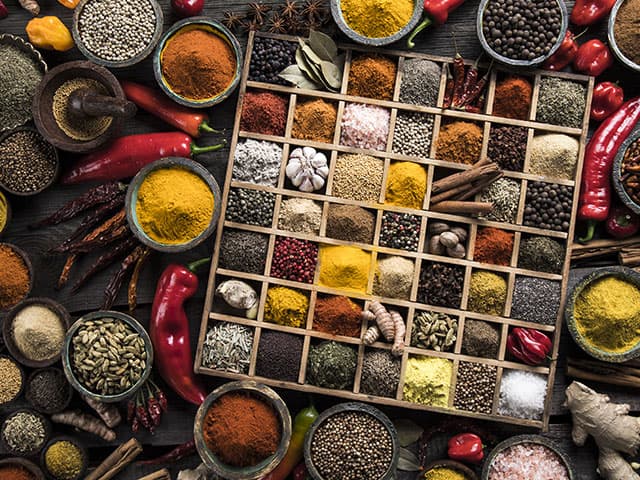
India supplies over 75% of the world's spices. Whether you are a wholesaler in Dubai, a food manufacturer in Germany, or a distributor in the United States, importing spices from India requires careful planning. This guide walks you through every step.
Step 1: Identify Your Spice Requirements
Before contacting exporters, define: - Specific spice and variety (e.g., Turmeric Finger Salem, Cumin Seed Unjha Grade A) - Quantity in metric tons (MT) - Quality specifications (curcumin content, ASTA color value, volatile oil percentage) - Packaging requirements (25 kg PP bags, vacuum packs, bulk containers) - Target delivery timeline
Step 2: Verify Exporter Credentials
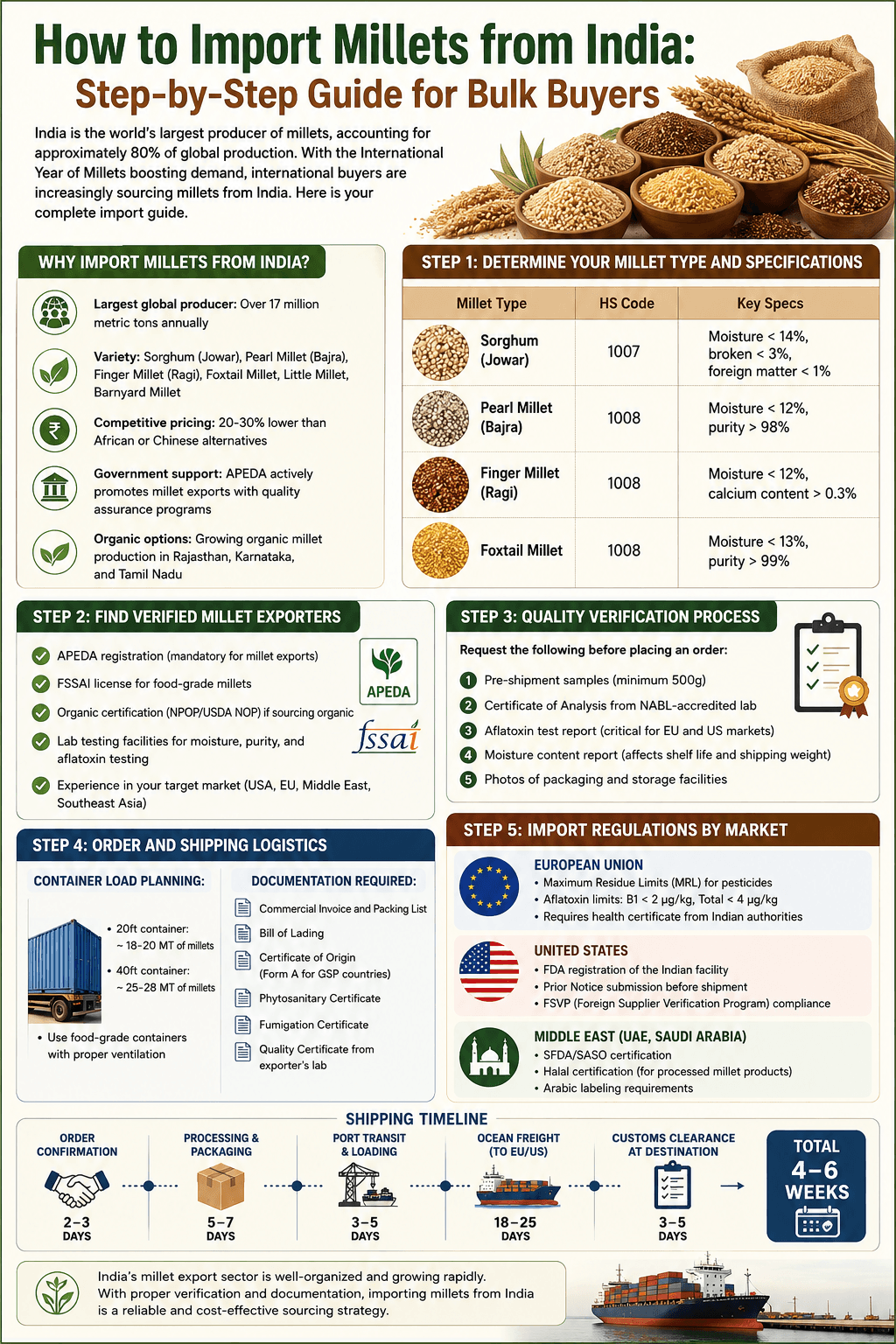
Always verify that your Indian spice exporter holds: - APEDA Registration (Agricultural and Processed Food Products Export Development Authority) — mandatory for all agricultural exports from India - Spices Board License — specific to spice exports, ensures quality standards - FSSAI License — Food Safety and Standards Authority of India certification - ISO 22000 / HACCP — food safety management certification - Organic Certification (if applicable) — NPOP or USDA NOP
Step 3: Request Samples and Quality Reports
Reputable exporters will provide: - Pre-shipment samples (usually 200-500 grams) - Certificate of Analysis (COA) with lab test results - Phytosanitary certificate draft - Photos of current stock and packaging
Step 4: Negotiate Terms and Place Order
Key negotiation points: - Incoterm: FOB (free on board) or CIF (cost, insurance, freight) - Payment terms: Letter of Credit (LC) for first-time buyers, TT advance for repeat orders - Quality tolerance: ±2% on specifications is standard - Rejection clause: Define conditions for quality-based rejection
Step 5: Shipping and Customs Clearance
Required documents for spice imports: - Commercial Invoice - Packing List - Bill of Lading - Certificate of Origin - Phytosanitary Certificate - Fumigation Certificate - Insurance Certificate (if CIF)
Common Import Regulations by Destination
| Destination | Key Requirement | |-------------|----------------| | USA | FDA registration, Prior Notice, FSVP compliance | | EU | Maximum Residue Limits (MRL), pesticide testing | | UAE | ESMA certification, halal certification | | Japan | Positive List System, strict MRL testing |
Tips for First-Time Importers
1. Start with a trial order of 1-5 MT before scaling 2. Use a freight forwarder experienced in food commodities 3. Check your country's spice import regulations before ordering 4. Plan for 4-6 weeks from order to delivery 5. Build relationships with 2-3 verified exporters for supply security
Importing spices from India can be highly profitable when done correctly. Partner with verified exporters, understand your local regulations, and always insist on quality documentation.